


Introduction
Introduction
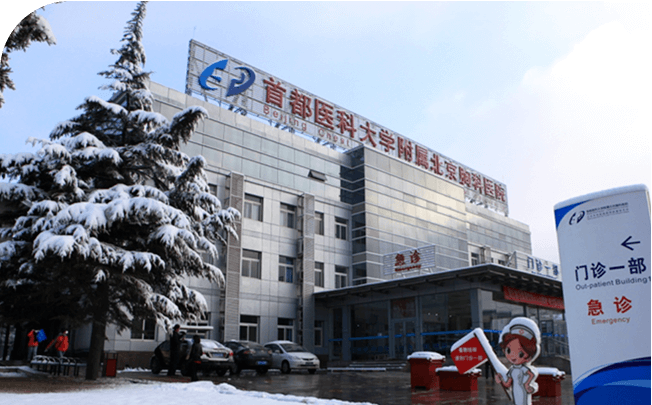
Beijing Chest Hospital, Capital Medical University (Beijing Institute of Tuberculosis and Thoracic Tumor Research) was founded in 1955, originally known as the Directly Affiliated Tuberculosis Institute and Directly Affiliated Tuberculosis Hospital under the Central Government. It was renamed Beijing Chest Hospital, Capital Medical University in 2010, adopting an integrated hospital-institute management system. It has developed into a Grade A Tertiary Hospital in Beijing, specializing in the diagnosis and treatment of thoracic diseases, integrating medical services, education, scientific research, and disease prevention. It serves as the 10th Clinical Medical College of Capital Medical University and is one of the first institutions in China authorized to confer doctoral and master's degrees. As one of the first designated medical institutions under Beijing's medical insurance scheme, a demonstration unit for Beijing research-oriented wards, and Beijing Clinical Research Quality Promotion Center, the hospital also serves as the chair unit of Tuberculosis Branch of the Chinese Medical Association. It has established the Lung Cancer Specialist Medical Alliance, and has been honored as National March 8th Red Banner Collective, National Model Staff Home, Capital Civilized Unit Model, and Most Popular Specialized Hospital.
Located at No. 9 Beiguan Street, Tongzhou District in Beijing Sub-center, the hospital covers an area of 120,500 square meters, with the current medical building area of 90,800 square meters. It has 653 inpatient beds and 1,206 staff members, including 246 senior professionals, 48 doctoral supervisors, 91 master's supervisors and nearly 100 nationally renowned senior experts. More than 30 experts, including Professor Ma Yu, a National Outstanding Science and Technology Worker, have received national and provincial-level special contribution awards or government special allowances. Over 60 professionals have been selected for municipal-level and above talent programs.
The hospital hosts 30 clinical and medical technical departments, including Cancer Center, Thoracic Surgery, Tuberculosis Department, Orthopedics, Cardiology Center, Respiratory and Critical Care Medicine, Critical Care Medicine, Anesthesiology, Emergency Medicine, Traditional Chinese Medicine, Infectious Diseases, Gastroenterology, Interventional Medicine, Breast and Thyroid Surgery, Stomatology, Psychiatry and Psychology, Medical Imaging, and Pathology. It houses 6 basic research laboratories, including the National Clinical Laboratory for Tuberculosis, Bacteriological Immunology Laboratory, Pharmacology Laboratory, and Cancer Research Center. It is equipped with cutting-edge modern medical devices, including VitalBeam intelligent linear accelerator, Revolution 256-slice 512-layer ultra-high-end spectral CT, fully digital MRI system with 3.0T imaging equipment, PET-CT, intelligent high-definition DSA, intravascular ultrasound (IVUS), and coronary plaque rotational ablation apparatus. The hospital excels in the diagnosis, treatment, clinical research and translational medicine of thoracic diseases, especially complex and severe cases. It has established a series of clinical centers, including Multidisciplinary Cancer Center, Multidisciplinary Tuberculosis Center, Cardiology Center, Minimally Invasive Diagnosis and Treatment Center, and Digestive Endoscopy Center, emphasizing cardio-pulmonary collaboration and multidisciplinary comprehensive treatment for complex thoracic diseases. It possesses high-level research platforms, including National Clinical Laboratory for Tuberculosis, Beijing Key Laboratory of Drug-Resistant Tuberculosis Research, Beijing Key Laboratory of Key Tuberculosis Prevention and Control Technologies, and Beijing Major Disease Sample Library. It also hosts specialized institutions of high standing, such as the WHO Collaborating Center for Tuberculosis Research and Training, Clinical Center for Tuberculosis Prevention and Control of China CDC, National Drug Clinical Trial Institution, Beijing International Science and Technology Cooperation Base for Tuberculosis Clinical Research, Beijing Osteoarticular Tuberculosis Diagnosis and Treatment Center, and Beijing Major Respiratory Infectious Disease Research Center.
As a technical support unit for tuberculosis prevention and control under the National Health Commission and the National Administration of Disease Control and Prevention, the hospital serves the national tuberculosis prevention and control program. It has initiated the National Tuberculosis Hospital Alliance, National Tuberculosis Clinical Trial Collaboration Center (CTCTC), and Beijing Innovation Alliance for Tuberculosis Diagnosis and Treatment Technology (IATB). It provides online diagnosis, telemedicine, and education services nationwide, especially in central and western regions, promoting the development of respiratory disease diagnosis and treatment in China. The hospital has taken important responsibilities in public health emergencies, including SARS, H1N1 influenza, avian influenza and COVID-19. It has also actively supported medical development in Xinjiang, Xizang, Inner Mongolia, and Liangshan, making significant contributions to thoracic disease prevention and control in Beijing and across China.
The hospital attaches great importance to scientific and technological innovation. It has undertaken numerous national research programs, including the National 863 Program, 973 Program, National Natural Science Foundation of China, and major science and technology projects during the 10th, 11th, 12th, 13th, 14th and 15th Five-Year Plan periods. It has organized the national baseline surveys on tuberculosis drug resistance and national surveys of tuberculosis specialized hospitals, developed clinical pathways and technical guidelines for tuberculosis, led the Capital Top Ten Dangerous Diseases Program, initiated the "One Scan, Two Screens" program, and conducted Beijing's lung cancer screening, providing critical data for lung cancer prevention and control in Beijing. Beijing Chest Hospital has led the post-marketing clinical trials of new anti-tuberculosis drugs: Bedaquiline, Delamanid, and Pretomanid, which were first administered to tuberculosis patients nationwide in this hospital. Since 1978, the hospital has achieved over 200 national, provincial, and municipal-level scientific achievements. Several award-winning projects, such as "Research, Industrialization and Application of Icotinib Hydrochloride", "Key Technologies for Precision Diagnosis and Treatment of Drug-Resistant Tuberculosis", and "Innovative Establishment and Application of Key Tuberculosis Diagnostic Technologies", have filled domestic and international gaps. The development of novel diagnostic and therapeutic technologies for thoracic diseases has maintained a leading position domestically, achieving the translation and implementation of multiple significant outcomes. The hospital prioritizes scientific innovation and achievement transformation, and has become a benchmark among municipal hospitals in the development and application of high-quality databases. Since 2020, 373 new patents have been authorized, with 538 achievements in the achievement pool and the amount of a single transformation reached 50 million yuan. 24 achievements have been transferred, with a contract value of 78.633 million yuan. From 2015 to 2023, the tuberculosis discipline ranked first in the "China Hospital Science and Technology Evaluation Metrics (STEM)" for nine consecutive years. The hospital has maintained an "A" grade (the highest for specialized hospitals) in the national tertiary public hospital performance assessment for four consecutive years.
In talent development, the hospital implements a talent-driven development strategy, launches the "Chest Hospital Innovation Forum" and key talent team programs. It currently has 4 national-level talents, including Overseas High-Caliber Young Scholars. In education, the hospital offers 6 doctoral and 14 master's programs at Capital Medical University, with 1 postdoctoral research station. The Beijing Institute of Tuberculosis and Thoracic Tumor Research provides 2 doctoral and 3 master's programs. The hospital currently has 91 master's supervisors and 48 doctoral supervisors, forming a high-level faculty team characterized by exceptional academic competence, strong clinical expertise, and remarkable educational outcomes. By 2026, a total of 353 master's students and 175 doctoral students have been trained, with 127 master's students and 98 doctoral students currently enrolled. It has cultivated numerous leading talents, discipline leaders, and core researchers in the fields of tuberculosis and thoracic oncology nationwide.
In recent years, under the leadership of the new Party committee, the hospital has carried out a series of inovative practices, focusing on high-quality Party building to drive high-quality development and contributing to Healthy Tongzhou, Healthy Beijing, and Healthy China initiatives. Guided by Xi Jinping Thought on Socialism with Chinese Characteristics for a New Era, the hospital is committed to build a world-class, internationally renowned chest hospital with "strong specialized disciplines and refined comprehensive services", writing a new chapter in high-quality development of public hospitals in the new era.